
Few words about the wonderful and inspring Tanzania
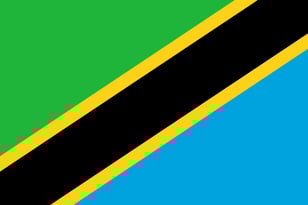
Tanzania is a state in East Africa bordering Kenya and Uganda in the north, Rwanda, Burundi and Congo in the west and Zambia, Malawi and Mozambique in the south.
Tanzania has been independent of the UK since 1961. The country has almost 60 million inhabitants (2018) and is the fifth largest country in Africa in terms of population. The capital is Dodoma, but the largest city and seat of government is Dar es Salaam. The United Republic of Tanzania is called in Swahili "Jamhuri ya Muungano wa Tanzania".
Over 100 tribal languages are spoken in Tanzania, the language of communication is Swahili (Kiswahili) and English. The Massai make up about 3% of the population. Tanzania is a presidential republic. The president, who is elected every five years in general elections, determines politics.
Between 30 and 40 percent of the population are Christian, most of them Catholic. On the Protestant side, they are mostly Lutherans. Everywhere there are still followers of the traditional religions, whose rites are often also observed by Christians and Muslims.
Since 2002 no more school fees have to be paid at state schools, which leads to large class sizes, especially in rural areas. However, parents still have to contribute to the costs of school lessons (officially for food, transport and school uniform). This money is mostly used for furniture, exercise books and chalk. In addition, the parents usually have to finance the school books. Especially in rural areas, many children cannot attend school. Especially in the conurbations there are also private or international schools, whose attendance is connected with high school fees.
Despite its economic growth rates, Tanzania is still one of the poorest countries in the world.
The Tanzanian mainland consists of a coastal plain 16 to 64 kilometres wide with tropical vegetation, the Massai savannah at an altitude of between 200 and 1100 metres in the north and a high plateau in the south (900-1200 metres), that reaches as far as Lake Malawi. The Central African Rift touches Tanzania in the west, the East African Rift runs centrally through the country. Witnesses to the geological processes in this tectonic fault zone are huge craters and volcanoes, such as Mount Rungwe (2960 m), Mount Meru (4562 m) and the highest mountain in Africa, Mount Kilimanjaro (5895 m).
Tanzanzia has 16 national parks. In the northwest lies the most famous, the Serengeti, which means "great plain" in the Massai language. The Massai Mara is just on the other side of the border in Kenya. Also significant is the Ngorongoro Crater and Conservation Area at the southern end of the Serengeti. The Tarangire, Lake Manyara and Ruaha National Parks, with over 20'000 km², the largest NP in Eastern Africa, are also well known. Even bigger, but a game reserve, is the Selous. In the national parks of Tanzania you can meet the Big-5 among many other animals.
The climate is tropical on the coast and moderate in the mountains. Wet and dry savannas with umbrella acacias and baobab trees dominate a large part of Tanzania. Semi-deserts and coastal plains (partly with mangrove swamps) make up the rest of the landscape.
Tanzania can be visited almost all year round. The main season is from June to September. Due to the partly heavy rainfall in the rainy season from March to May, the fewest tourists travel here.
From Europe it's easy to travel to Tanzania with several Airlines, like Lufthansa, KLM, Ethiopian Airlines, Kenya Airways, EgyptAir, British Airways, etc.

E-mail: info@inspiringtanzania.com
Phone: +255 765 861060 /+420 606 796 606